

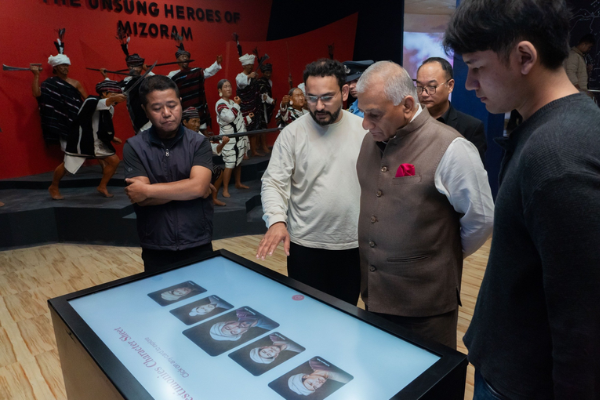
Mizoram Governor Vijay Kumar Singh on Tuesday inspected the Ropuiliani Tribal Freedom Fighters Museum at Kelsih near Aizawl, days ahead of its scheduled inauguration by Prime Minister Narendra Modi through a virtual programme on November 15, Lok Bhavan sources said.
The museum, built under the Ministry of Tribal Affairs, has been established to commemorate the courage, sacrifice and contributions of Mizo tribal freedom fighters.
During his visit, the Governor reviewed the preparations and ongoing works at the museum complex, the sources said.
Singh said the museum was significant not only for Mizoram but also for the country as it would preserve and showcase the contributions and sacrifices of Mizo freedom fighters.
He said the facility should inspire future generations and serve as an important centre for learning about the region’s history and heritage.
The Governor urged officials to further beautify and develop the site using locally available materials and in a manner that reflects Mizo cultural traditions.
He also stressed the need to develop the museum to a standard that would attract visitors and earn national and international recognition.
The museum complex includes a main museum, open-air theatre, traditional hut, heritage walk, Birsa Munda Tribal Pride Garden, cafeteria, staff quarters and other facilities, according to officials.
Ropuiliani was a prominent Mizo chieftainess and one of the early tribal leaders to resist British colonial rule in the Lushai Hills.
After the death of her husband, Chief Vandula, she became the chieftainess of Denlung and emerged as a strong political leader.
She refused to accept British authority, resisted taxes and forced labour, and opposed British attempts to extend administrative control over Mizo villages.
Her defiance made her an important figure in the Mizo resistance movement.
In 1893, the British captured Ropuiliani and her son Lalthuama.
She was imprisoned and later taken to Rangamati in the Chittagong Hill Tracts, where she died in captivity in January 1895.
Today, Ropuiliani is remembered as a symbol of Mizo courage, resistance and sacrifice, particularly for her role as a woman leader who stood against British colonial expansion.
The Ropuiliani Tribal Freedom Fighters Museum at Kelsih commemorates her legacy and the contribution of Mizo tribal freedom fighters.