

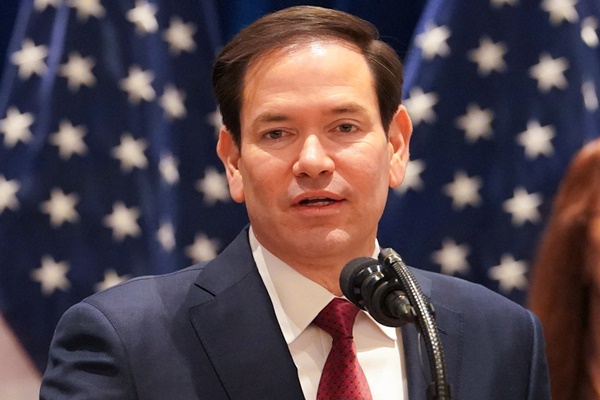
US Secretary of State Marco Rubio has said, US has seen no evidence of China providing military assistance to Iran during the ongoing regional crisis, while urging Beijing to support international efforts aimed at restoring freedom of navigation through the Strait of Hormuz.
Rubio’s said this during a House Appropriations Subcommittee hearing after lawmakers questioned him about China’s relationship with Iran and whether Beijing had provided support during recent hostilities. The Secretary acknowledged that Iran possesses military equipment of Chinese origin and maintains longstanding ties with Beijing, but said Washington had not observed any recent Chinese actions that altered the military balance during the conflict.
Rubio described China’s approach as cautious, suggesting Beijing has sought to avoid becoming directly involved in the crisis despite its broader strategic relationship with Tehran. At the same time, Rubio called on China to play a more constructive role at the United Nations, particularly regarding efforts to address disruptions affecting maritime traffic through the Strait of Hormuz.
US Secretary of State mounted a firm defence of Washington’s military approach toward Tehran, asserting that Iran had sought to develop its conventional arms infrastructure as a shield to safeguard its nuclear ambitions.
During his testimony, Rubio also stated that recent American military operations had drastically diminished Iran’s military capabilities. He emphasised that Tehran’s maritime forces had suffered a catastrophic blow during the hostilities. Dismissing the current state of their naval assets, he remarked, what’s left of Iran’s navy is a bunch of Boston Whalers with machine guns on them, adding that the fleet had been severely degraded.
Beyond naval power, Rubio noted that targeted US actions had heavily impacted Iran’s broader defence infrastructure, specifically hitting its manufacturing lines for unmanned aerial vehicles. While he admitted that cheap drone technology remains a persistent global threat, he pointed out that Tehran’s production capacity had been eroded.