


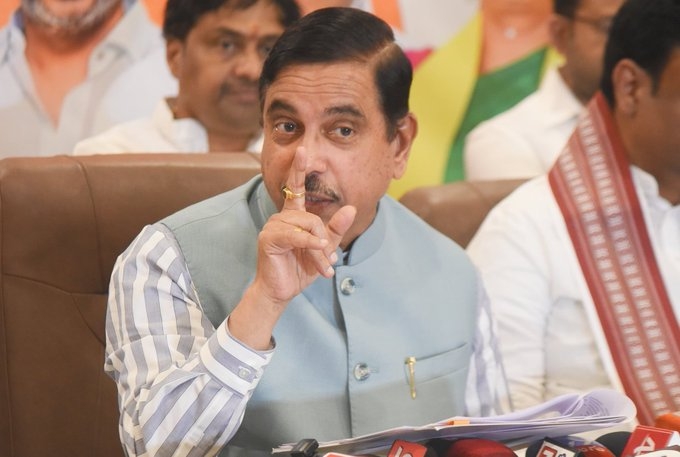
Union Minister for New and Renewable Energy Pralhad Joshi today said that country’s renewable energy journey has emerged as one of the most remarkable success stories in the world. Addressing an event in New Delhi, Mr. Joshi said, the PM Surya Ghar scheme has benefited nearly 42 lakh households, transforming citizens from mere consumers of electricity into producers of clean energy.
The Minister noted that electricity bills have been reduced by around 71 per cent on average, with many beneficiaries recording zero power bills. He said initiatives such as PM Surya Ghar and PM-KUSUM reflect the government’s commitment to expanding renewable energy access and empowering citizens through sustainable development.
During the event, the Minister released a report on the Floating Solar PV Potential Assessment of India, launched an online portal for Small Hydro Power Development Schemes and witnessed the exchange of an MoU between the National Institute of Solar Energy and Military Engineer Services.
Mr. Joshi said that various initiatives launched by the Ministry, including the online portal for Small Hydro Power Development Schemes, reflect India’s commitment to harnessing natural resources in a smarter and more sustainable manner. He said the portal was launched within 83 days of the scheme’s approval in March, demonstrating the government’s focus on speed, transparency and efficiency. He added that India is simultaneously expanding solar, wind and other non-fossil energy sources to ensure sustainable development and energy security.
Mr. Joshi noted that renewable energy initiatives, including solar, wind, small hydro and floating solar projects, are creating new opportunities for sustainable growth.
New and Renewable Energy, Secretary Santosh Kumar Sarangi said, floating solar and agri voltaics will play a key role in expanding India’s renewable energy capacity in the coming years. Highlighting India’s solar growth, Mr. Sarangi said the country achieved a record installation of nearly 44 gigawatts of solar capacity last year and will need around 16 hundred gigawatts by 2050. He added that the National Institute of Solar Energy has carried out a comprehensive assessment of floating solar potential across states by identifying suitable reservoirs, water bodies and tanks.