

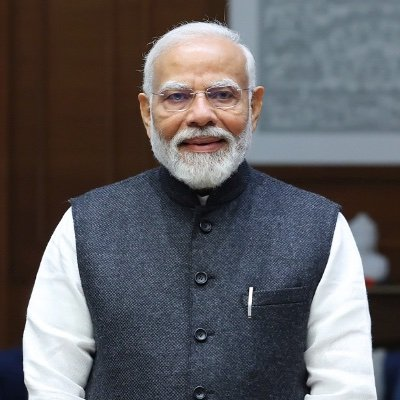
Prime Minister Narendra Modi will reach in Gothenburg today on a two-day visit to Sweden, marking a historic milestone in India-Sweden relations. He will hold bilateral talks with Swedish Prime Minister Ulf Kristersson to review cooperation in trade, green transition, AI, emerging technologies, startups, resilient supply chains, defence, space, climate action, and people-to-people ties.
The two leaders will also address the European Round Table for Industry alongside European Commission President Ursula von der Leyen. This visit is the third leg of Prime Minister Modi’s UAE and European tour and his first to Europe since the India-EU Free Trade Agreement took effect in January 2026. Bilateral trade reached a record 7.75 billion US dollars in 2025, with Swedish investment in India totaling over 2.8 billion dollars between 2000 and 2025. The partnership was strengthened during Mr Modi’s 2018 visit, which led to the Joint Innovation Partnership for a Sustainable Future.
During bilateral the two leaders also expected to hold discussions on avenues of collaboration in green transition, AI, emerging technologies, startups, resilient supply chains, defence, space, climate action and people-to-people ties. The two Prime Ministers will also address the European Round Table for Industry, a leading pan-European business leaders forum, along with H.E. Ms. Ursula von der Leyen, President of the European Commission. While talking to Akashvani, Mr Robin Sukhia, CEO of India-Sweden Business Council, underlines the importance of people to people connect and excitement of hosting Indian Prime Minister for the second time. The businesses across Sweden are excited with the visit to Prime Minister and hold high hopes regarding the outcome of the visit.
Yesterday, in the second leg of the Prime Minister’s tour, India and the Netherlands elevated their ties to a strategic partnership and inked 17 agreements to boost cooperation in defence, critical minerals and other key sectors. During talks between Prime Minister Modi and his Dutch counterpart Rob Jetten, both leaders expressed deep concern over the situation in West Asia, especially its serious implications for the region and the wider world in view of disruptions caused to the global energy supplies and trade networks. Mr Modi and Mr Jetten also called for freedom of navigation and global flow of commerce through the Strait of Hormuz, while opposing any “restrictive” measures, and reaffirmed their support for ongoing initiatives in this regard, according to a joint statement.
The two leaders also discussed the situation in Ukraine – marked by the ongoing conflict with Russia and regional security developments. They agreed to continue supporting efforts towards the achievement of a comprehensive, just, and lasting peace in Ukraine through dialogue and diplomacy, based on the principles of the UN Charter and international law. Both leaders also agreed to explore possibilities of establishing a defence industrial roadmap to ensure joint manufacturing of defence equipment, systems, components and other key capabilities through transfer of technology and setting up of joint ventures. Following the talks, India and the Netherlands unveiled a “strategic partnership roadmap” to boost ties in trade and investment, defence and security, critical and emerging technologies including semiconductors, space, AI and quantum computing. The two leaders also launched an ambitious “India-Netherlands roadmap on the development of green hydrogen”.