

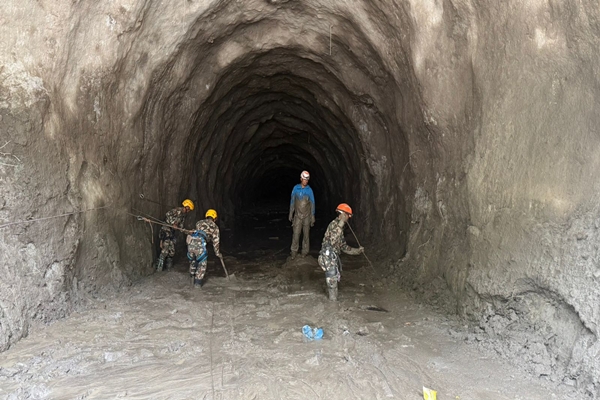
Rescue teams in Nepal are racing against time to reach more than 600 workers believed to be trapped in mud-filled tunnels at the Trishuli-3A hydropower site. Crews are using explosives, heavy machinery and air pumps to clear the tunnels and search for survivors. According to Nepal’s disaster management authority, 939 people have died, and 3,925 are missing, including 592 foreign nationals. So far, 279 people have been rescued from hydropower sites, while more than 11,000 people have been rescued across the country.
The rescue operation is being supported by Nepalese and Chinese military teams, along with experts from India, South Korea and Australia. Severe flooding and landslides have made it difficult for rescuers to locate the buried tunnels. India has sent specialised teams to help with both rescue operations and the identification of victims. A 19-member Indian forensic team began work in Kathmandu, assisting with DNA testing to identify recovered remains.
An Indian tunnel-rescue team is also working at hydropower sites in Chilime and Langtang. Experts are helping Nepalese authorities search for 933 workers and employees who have been missing since August 26, with many believed to be trapped inside the tunnels. At least 11 hydropower projects were damaged by the floods. Families say rescue efforts have been too slow and are urging authorities to act quickly. Downstream in Chitwan, nearly 300 bodies have been recovered from rivers. Many remain unidentified, so authorities are using DNA testing.
Due to a shortage of freezers, some bodies have been temporarily buried until they can be identified. Nepal has asked several countries for help, including freezers, DNA-testing equipment, drones, bridges and specialised tunnel-rescue tools. A team of 18 Indian forensic experts is assisting with DNA identification. In Tibet, Chinese state media reports 16 deaths and 546 missing people.
China has rejected claims that its hydropower projects caused the disaster, calling such allegations malicious speculation. The floods, believed to have been triggered by an ice-rock avalanche near the Nepal-Tibet border, have caused widespread destruction, damaging homes, roads, bridges and hydropower infrastructure across Nepal.