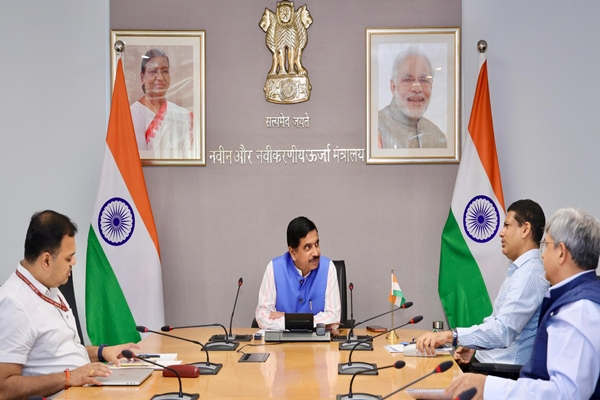


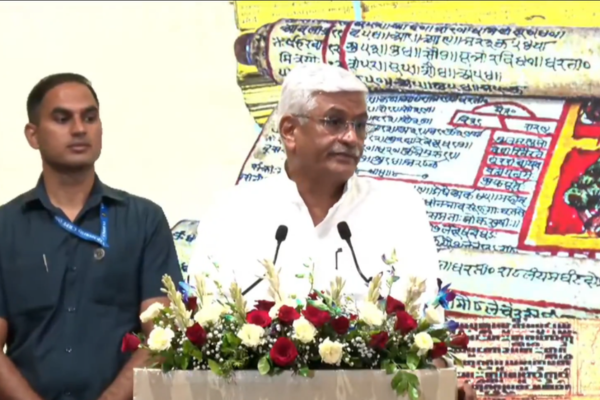
Union Minister for Culture and Tourism Gajendra Singh Shekhawat today said the National Manuscript Digitisation Drive is not merely a government programme but a national mission to preserve India’s civilisational heritage for future generations.
Addressing a workshop on the National Manuscript Digitisation Drive in New Delhi, the Minister said the initiative honours India’s rich knowledge tradition while laying the foundation for a stronger future. He said that more than 1.22 crore manuscripts have been identified and verified under the Gyan Bharatam Mission, surpassing the initial target of one crore.
He credited the achievement to the coordinated efforts of state governments, academic institutions, religious organisations, district administrations and manuscript custodians across the country.
Highlighting the importance of India’s knowledge tradition, the Minister said civilisations are remembered not merely for their military strength or economic prosperity but for preserving and transmitting knowledge across generations. He said India’s uninterrupted civilisational continuity is rooted in its traditions of Shruti, Smriti and written manuscripts, which have safeguarded knowledge for thousands of years.
Calling manuscripts the soul of India, Shekhawat said they contain invaluable knowledge on subjects ranging from philosophy and spirituality to mathematics, astronomy, agriculture, metallurgy, water management and environmental conservation. He added that these manuscripts could also contribute to modern research in areas such as artificial intelligence, quantum computing, biotechnology, climate science and sustainable development.
Outlining the roadmap for the next phase, Shekhawat identified five priority areas: conservation of manuscripts, standardisation of digitisation and preservation protocols, strengthening partnerships with institutions and custodians, leveraging advanced technologies such as artificial intelligence, machine learning, optical character recognition (OCR) and advanced imaging, and ensuring that digitised manuscripts become easily accessible to the public.
He urged all stakeholders to continue working in mission mode to preserve, digitise and conserve the country’s manuscript heritage, ensuring that India’s intellectual legacy remains accessible to future generations and the global community.