


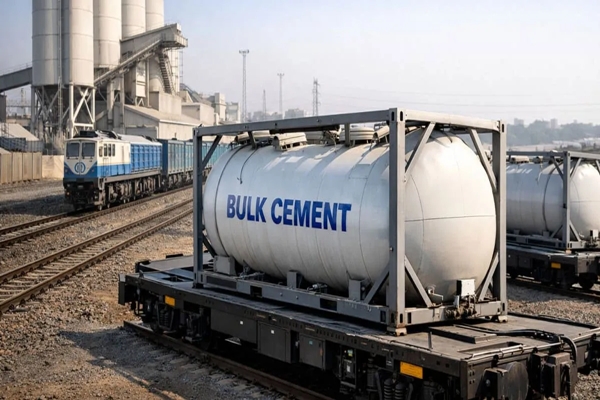
Indian Railways has recorded a 170 per cent rise in cement movement in the last four months. The Railways Ministry said that the increase comes after Railways introduced a series of reforms in cement transportation last year in November. These reforms are based on innovative bulk cement tank containers for seamless end-to-end logistics. The cement reforms were introduced to increase rail-based movement of bulk cement and encourage a shift from road transport to cleaner and more efficient rail logistics. Railways introduced customised tank containers and bulk cement terminal policy to support multimodal handling of cement.
Union Railways Minister Ashwini Vaishnaw reviewed container sector reforms and their implementation today. Mr Vaishnaw said that the new system has made loading and unloading easier and is also reducing material loss. The Minister said that cement manufactured at one place can now move directly to consumption centres in specialised tank containers, reducing multiple handling processes and improving plant-to-market efficiency. Mr Vaishnaw said that the reform is also environment friendly as dust generation during loading and unloading has been significantly reduced. He added, the shift towards bulk movement through containers is lowering fuel consumption, reducing emissions and promoting cleaner logistics while also reducing congestion on roads. The Minister urged officials to tap the vast potential in the fly ash transportation market and convert the waste generated by thermal power plants into national wealth.
He noted that nearly three hundred million metric tonnes of fly ash is produced in the country, but only about 13 million tonnes is currently transported by Railways. He asked officials to significantly increase Railways’ share and facilitate movement of fly ash to brick kilns, cement industries and construction sites across the country. Calling it a major waste to wealth opportunity, he said fly ash, often treated as waste by power plants, is actually a valuable resource for road construction, cement manufacturing and brick production.