

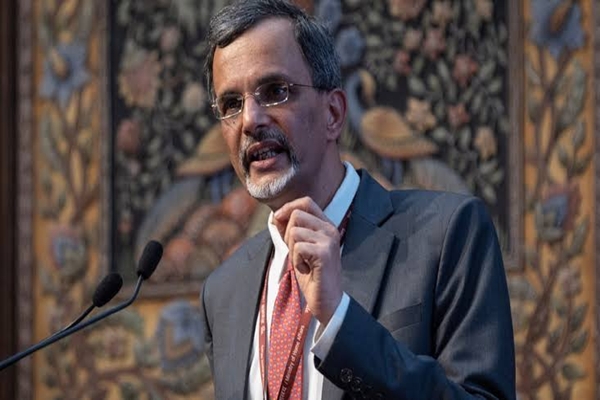
Chief Economic Adviser, Dr. V. Anantha Nageswaran today said that foreign capital is returning sharply to India as oil prices cool below 100 dollars per barrel and the emerging risks regarding AI valuation. Addressing the 65th General Assembly and Annual Meeting of the World Federation of Exchanges (WFE) in Mumbai, Dr. Nageswaran said India has recorded foreign portfolio inflows of 11.3 billion dollars in just the first 18 days of November.
The CEA further underlined that India remains poised to be a big beneficiary in the course of the next financial year as the AI bubble comes down to realistic levels, adding that earlier currency pressures from AI outflows will now likely turn into a source of currency strength. He also highlighted that India has sustained roughly 7 per cent real GDP growth despite global tariff turmoil, supply shocks, and geopolitical conflicts, adding that India has been successful in lifting roughly 500 million people above the 4.20 dollar-a-day moderate poverty line, with rural poverty falling faster than urban in the past decade.
While noting that the Indian Government, which had been cautious about trade liberalisation until around 2020, Dr. Nageswaran said that the government has embraced free trade agreements with considerable enthusiasm in the post-pandemic period. He said that India has not only concluded but also operationalised trade agreements with the UK, Oman and New Zealand this year alone. He added that a trade agreement with the European Union has also been concluded while trade agreements with the US and Canada are also imminent.
Pointing towards India’s strong export performance in the current financial year, the CEA said exports of goods and services stood at around 569 billion dollars from April to October, registering a growth of nearly 17 percent.
Talking about the goal of Viksit Bharat by 2047, the CEA flagged five unique challenges – geopolitical fragmentation, China’s manufacturing scale, the energy trilemma, AI-led job shifts, and social media’s impact on youth cognitive skills. To counter these, the CEA said closing technology gaps will buy resilience for India, while agriculture, trade skills, and human-centric services will buy leverage for India.