

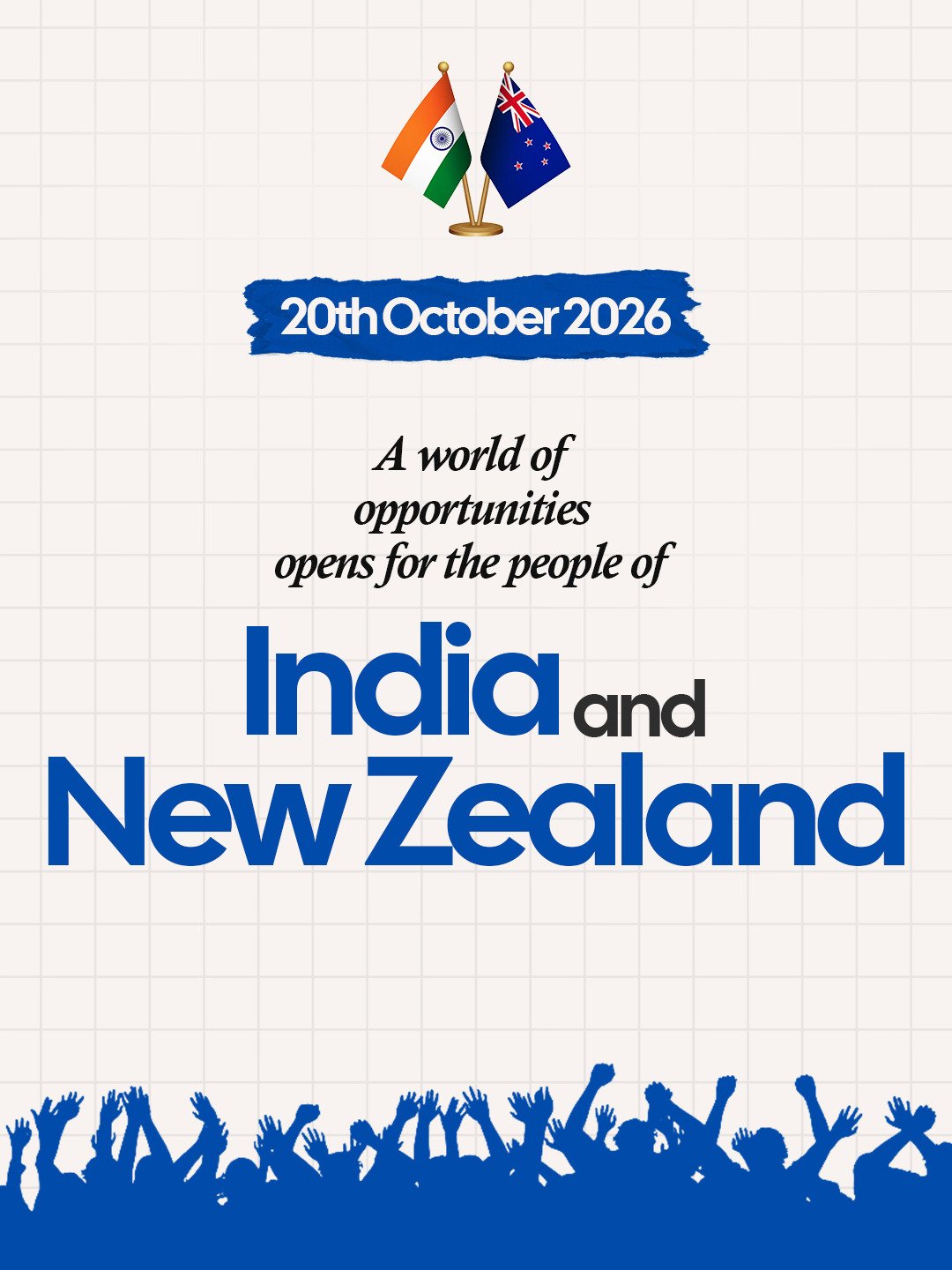
The India-New Zealand Free Trade Agreement (FTA) came into force today, on the occasion of Vijay Dashami, a day symbolising victory and new beginnings. The agreement will provide duty-free access for 100 per cent of Indian exports to New Zealand.
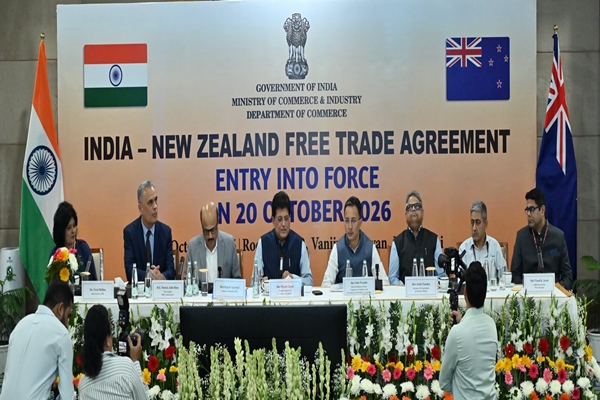
Addressing a ceremony on the India-New Zealand Free Trade Agreement in New Delhi yesterday, Commerce and Industry Minister Piyush Goyal said that the agreement is aligned with the vision of Prime Minister Narendra Modi for Viksit Bharat 2047. He said the agreement opens significant new opportunities for India’s exporters, particularly MSMEs, artisans, farmers and pharma. The Minister highlighted that both the countries have agreed to work towards the goal of doubling bilateral trade in goods and services with New Zealand to approximately 35 thousand crore rupees by 2030.
Our correspondent reports that the FTA reflects India’s commitment to forging partnerships with developed economies that deliver market access, create employment opportunities and empower youth, women and MSMEs.
New Zealand has eliminated customs duties on all tariff lines covering Indian exports, removing peak tariffs of up to 10 per cent. Textiles, apparel, leather, footwear, gems and jewellery, engineering goods, automobiles and auto components, chemicals, pharmaceuticals, agricultural products and processed foods are expected to benefit. Duty-free access for wooden logs, coking coal and metal waste and scrap will further strengthen manufacturing and MSME supply chains.
The pharmaceutical and medical device industries will benefit from streamlined regulatory processes. For the first time, New Zealand has provided dedicated access in Health and Traditional Medicine Services, covering Ayurveda, Yoga and other AYUSH systems. Indian youth and professionals will have access to a quota of 5,000 Temporary Employment Entry visas and 1,000 Working Holiday visas every year. There will be no numerical cap on Indian students, with post-study work rights of up to three years for STEM Bachelor’s and Master’s graduates and up to four years for doctoral scholars.