

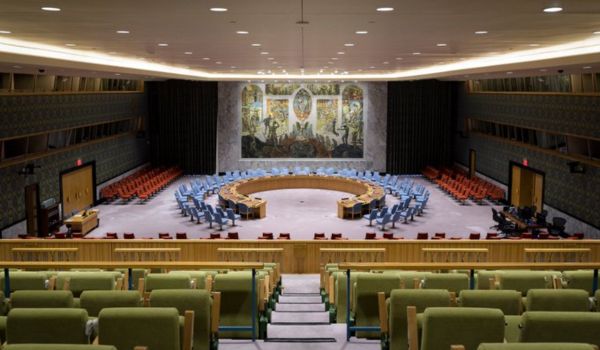
Five countries, including Austria, Kyrgyzstan, Portugal, Trinidad and Tobago, and Zimbabwe, have been elected non-permanent members of the UN Security Council for a two-year term. They will assume their seats on January 1, 2027, and serve until December 31, 2028. The newly elected members will replace the outgoing non-permanent members – Denmark, Greece, Pakistan, Panama and Somalia.
A candidate must obtain the support of two-thirds of the UN member states present and voting at the General Assembly session in order to secure a non-permanent seat on the Security Council, regardless of whether the candidacy is contested or not. A minimum of 129 positive votes is required to win a seat if all 193 member states are present and voting. Member states that abstain are considered not voting.
The Security Council has 15 members, five of which are permanent: Britain, China, France, Russia and the United States. The 10 non-permanent seats of the council are allocated by geographic region, with five replaced each year.