

President Droupadi Murmu has said that Chhattisgarh was freed from the menace of Naxalism with the combined efforts of central and state governments, and it is now on the path of progress by moving away from the path of Naxalism. Addressing the ‘Bastar Dussehra Festival 2026’ event at Lalbag Maidan in Jagdalpur, she also expressed confidence that youth tribal communities would actively participate in the country’s journey towards becoming a developed nation.
The President lauded the efforts to provide financial facilities to tribal entrepreneurs and connect them with markets. She said, these efforts would help achieve the goal of building a developed India by 2047 through equitable development.
The President urged people to protect the forests and hills of their region, emphasising that these natural resources provide food, water and other essentials for life. She said that protecting nature should be the primary responsibility of every community.
The President said that the Bastar Dussehra festival brings together tribal communities from across the region. She also described the traditional Muria Darbar as a reflection of democratic values, where people present their concerns and grievances to their leaders. The President is on a two-day visit to Chhattisgarh.
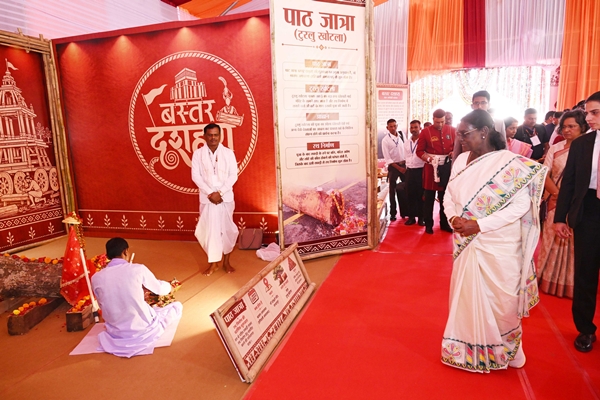
During her visit to Lalbagh Maidan, the President visited various stalls showcasing the Bastar Dussehra festival and interacted with local school children. The programme was also addressed by Chhattisgarh Governor Ramen Deka and Chief Minister Vishnu Deo Sai. Several other ministers were also present on the occasion.
Earlier in the day, the President visited the Maa Danteshwari Temple in Jagdalpur and offered prayers according to traditional rituals. Later, she attended the traditional Muria Darbar at Sirhasar Bhavan, a significant event associated with the world-famous Bastar Dussehra festival. During the interaction, the President met local tribal leaders, priests and traditional community representatives, including Manjhis and Chalkis, and listened to their concerns.