

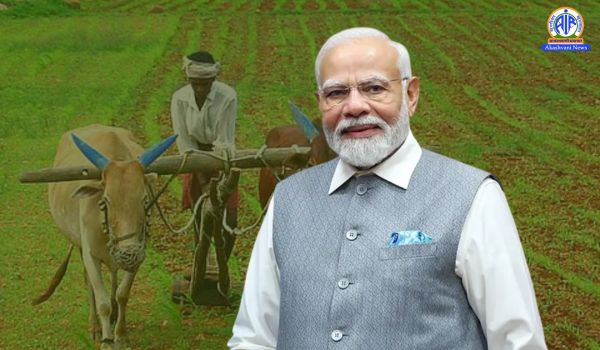
The Narendra Modi government has taken several initiatives in the last twelve years for the welfare of farmers and to enhance their income. One of the most significant steps has been the launch of the PM-KISAN Scheme, which is one of the largest welfare initiatives in the country. Under this Pradhan Mantri Kisan Samman Nidhi scheme, farmers receive six thousand rupees annually directly into their bank accounts. More than four lakh 28 thousand crore rupees have been transferred into the accounts of around nine crore 50 lakh farmer families.
Schemes like PM Matsya Sampada Yojana and National Livestock Mission were also launched to increase farmers’ income through multiple sources. The efforts like PM Krishi Sinchayee Yojana and the Soil Health Card Scheme have strengthened irrigation and soil productivity.
Since 2014-15, nearly 26 crore Soil Health cards have been issued till March this year. The Fasal Bima Yojana has helped nearly 23 crore farmers with crop insurance claims worth one lakh 92 thousand crore rupees. The Pradhan Mantri Kisan Maandhan Yojana is providing a monthly assured pension of 3000 rupees to small and marginal farmers. Talking to Akashvani News, a beneficiary of Uttar Pradesh hailed the scheme, saying that it is beneficial for farmers as it will support their livelihood.
The Minimum Support Price has become a lifeline for farmers as the government has fixed the MSP at 1.5 times the cost of production. Due to the government’s policy support, the total foodgrain production has increased from 265 million tonnes in 2013-14 to around 358 million tonnes in 2024-25. India has also become the world’s largest rice producer, surpassing China with a record production of over 154 million tonnes. Today, the Indian farmer stands not just as a cultivator but as a key driver of national growth.